Caribbean Cuisine
Caribbean Food in Puerto Viejo: The Dishes Worth Knowing
5 min read
Ask someone what they remember most about Puerto Viejo de Talamanca and they will often mention a dish. Rice and beans fragrant with coconut milk. A whole snapper fried until the skin blisters. A bowl of rondón that arrived warm and smelled like the sea. The town sits on Costa Rica's Caribbean coast in Limón Province, and the cooking reflects a cultural history unlike anywhere else in the country.
Afro-Caribbean traditions, indigenous Bribri ingredients, and centuries of life beside the Caribbean Sea have shaped a cuisine built around coconut milk, fresh seafood, plantains, and bold but balanced seasoning. For visitors arriving for the first time, understanding the flavours is almost as useful as choosing where to eat.
What Makes This Cuisine Different
Elsewhere in Costa Rica, traditional cooking tends toward mild seasoning and inland staples. Caribbean coastal food here operates with a different vocabulary — one shaped by African, indigenous, European, and West Indian influences layered over several centuries. On the plate, that looks like:
- Coconut milk used as a base for rice, sauces, and slow-cooked stews
- Scotch bonnet and chili peppers that add warmth rather than fire
- Plantains at every stage of ripeness and in every preparation imaginable
- Fresh seafood, landed daily from the Caribbean
- Curry spices and slow-cooked meats reflecting West Indian influence
- Rice and beans cooked together in coconut milk — not made separately, as elsewhere in Costa Rica
Many dishes combine sweet, spicy, smoky, and savoury in a single meal. The complexity is built-in, not added as a performance.
Rice and Beans
No dish appears more consistently on tables in Puerto Viejo. The rice and beans are cooked together in coconut milk, with thyme, peppers, and herbs — richer and more aromatic than the standard gallo pinto found throughout the rest of the country. The result has a slight sweetness and a creaminess that standard side dishes rarely achieve.
It pairs with nearly everything: Caribbean-style chicken, fresh fish, stewed beef, pork, seafood. Every kitchen has its own version, passed down and quietly adjusted over generations. Eating it at a few different spots reveals how much variation lives inside a dish that looks simple on a menu.
Rondón
Rondón is the most culturally significant dish on this coast. It is a slow-cooked stew built from whatever seafood and vegetables are available — fish, lobster, crab, shrimp, root vegetables, breadfruit, yuca, plantain — simmered in coconut milk until the broth deepens and everything tastes of somewhere specific.
It has roots throughout the Caribbean and has been prepared in the communities along this coast for generations. In Puerto Viejo it is typically found at smaller, locally run kitchens rather than tourist menus, which is part of what makes it worth seeking out. If it is listed as the day's special, order it.
Whole Fried Fish (Pescado Frito)
Near the beach you will find pescado frito — whole snapper or sea bass, seasoned and deep-fried until the skin crisps and the flesh stays moist. A no-waste approach to cooking that has always been part of local tradition. It arrives with patacones, a simple salad, and rice and beans. It needs nothing added.
Ceviche
Ceviche appears across Latin America but has its own character in Puerto Viejo. Local versions typically feature sea bass or shrimp cured in lime juice, mixed with cilantro, onion, and peppers. Some preparations add a touch of coconut milk, which shifts the whole flavour profile toward something distinctly Caribbean. Refreshing, acidic, and made from the morning's catch.
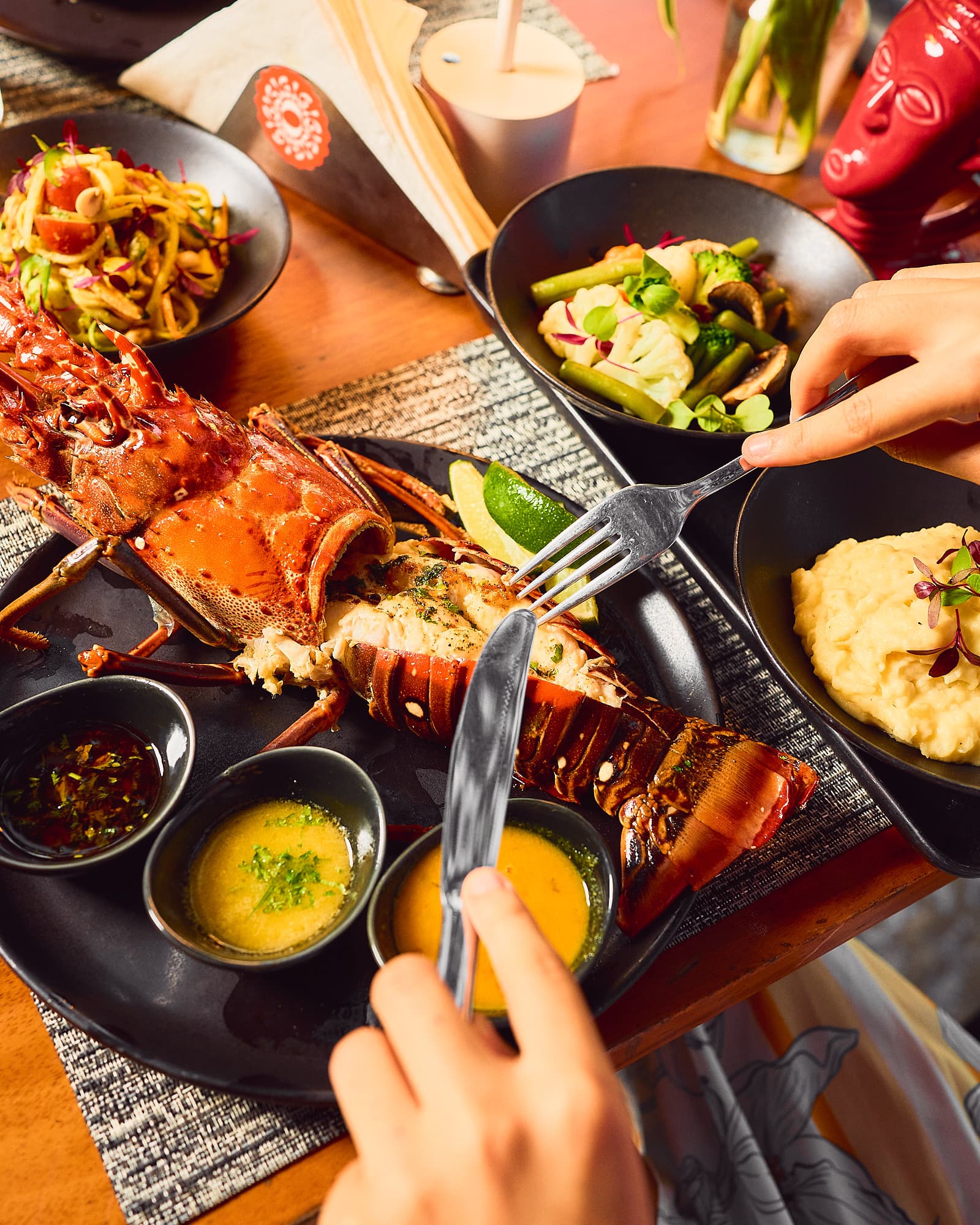
Lobster (Langosta)
Caribbean spiny lobster — no claws, but firm flesh and strong flavour — is a seasonal ingredient. It is typically grilled or sautéed with garlic and butter. Availability follows fishing regulations and seasonal closures, so ask locally before you set your heart on it. When it is in season, it is very good.
Shrimp (Camarones)
Shrimp in garlic sauce — camarones al ajillo — is a staple at seafood spots across town. Shrimp cooked in coconut curry is especially popular; the sweetness of the coconut and the richness of fresh shrimp suit each other well. Locally sourced Caribbean shrimp is noticeably fresher than imported alternatives, and the difference shows on the plate.
Plantains, Everywhere
Plantains are one of the most versatile ingredients in Caribbean cooking, and Puerto Viejo uses them at every stage of ripeness. Patacones — twice-fried green plantains — are crisp and substantial, the standard companion to most main courses. Sweet ripe plantains, caramelised and soft, appear alongside anything spiced or salted because they balance heat with natural sweetness. You will also find them stewed in rondón, chipped, and folded into soups. There is rarely a plate here without them.
A Note on Spice
Caribbean food in Puerto Viejo is often assumed to be intensely hot. It rarely is. The cooking focuses on layered seasoning — thyme, garlic, allspice, ginger, scotch bonnet, coconut, citrus — and the point is complexity, not fire. Fresh ingredients carry most of the weight on their own.
What to Order First
Most accessible entry point: Rice and beans with Caribbean chicken or fresh fish.
Fullest expression of the region: Rondón — ideally at a small local spot when it is the day's special.
Best side dish: Patacones, or sweet fried plantains alongside anything from the menu.
Flavour that defines the coast: Coconut curry shrimp — seafood, spice, and coconut in one bowl.
At GigiO, our kitchen draws on these same traditions: whole fried fish, fresh ceviche, Caribbean curry, and a shared seafood platter built from the morning's catch. Puerto Viejo's food is not shaped by trends. It is the product of centuries at the intersection of sea, land, and the communities that have called this coastline home.